Coin Bureau
My role
Lead UI/UX Designer
Time frame
2022 - 2024
Platform
Website
Industry
Cryptocurrency Education and E-commerce
Introduction
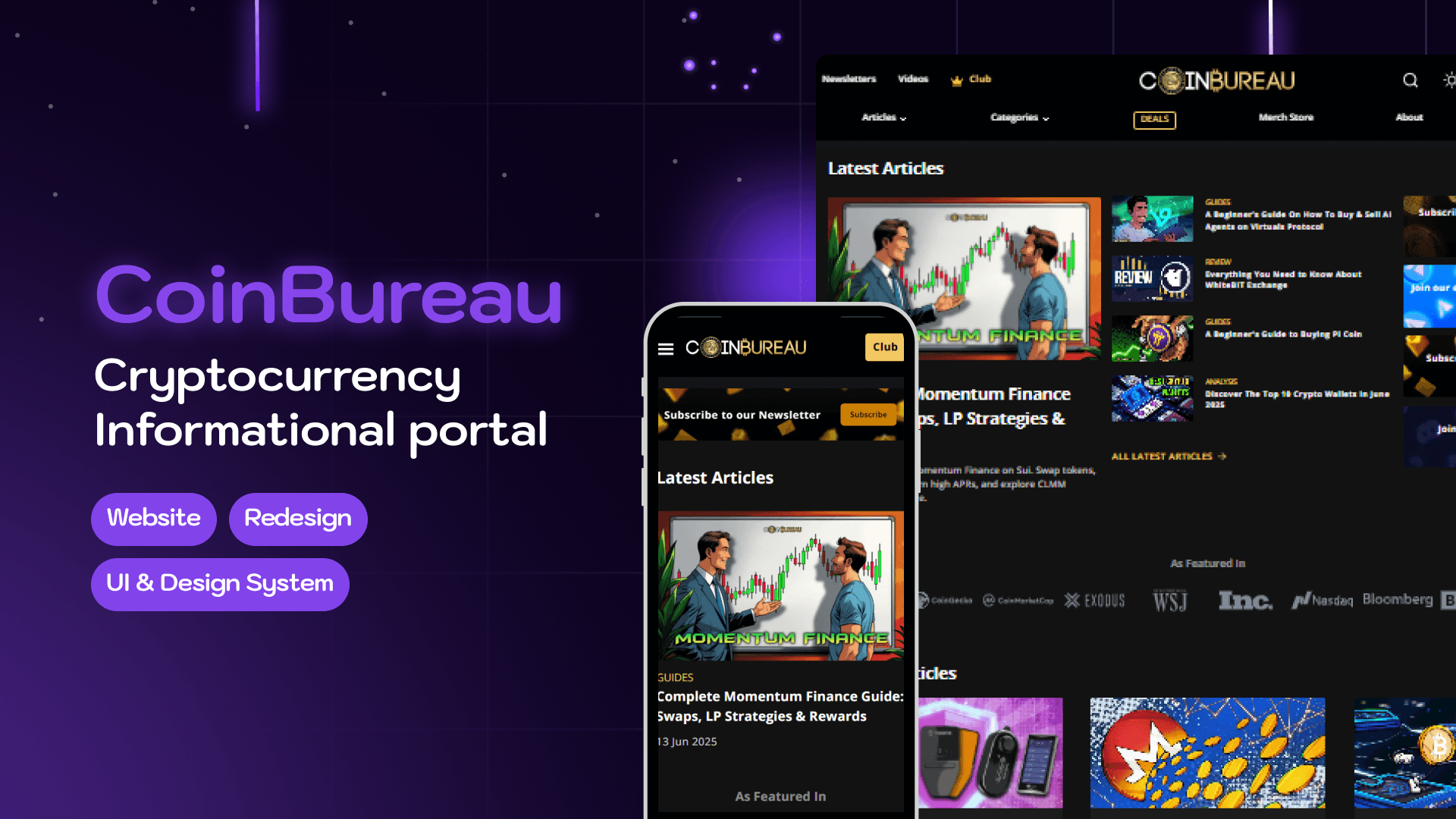
Coin Bureau, a leading crypto education platform, had a growing audience but struggled with engagement due to navigation challenges, poor content visibility, and design inconsistencies. As the UI designer, I led a strategic redesign to create a seamless user experience, ensuring that content was easy to discover, engagement was maximized, and business goals were met.
This is the story of how I helped Coin Bureau turn user frustrations into a streamlined, high-performing website.
The Challenge: When a Great Resource is Hard to Navigate
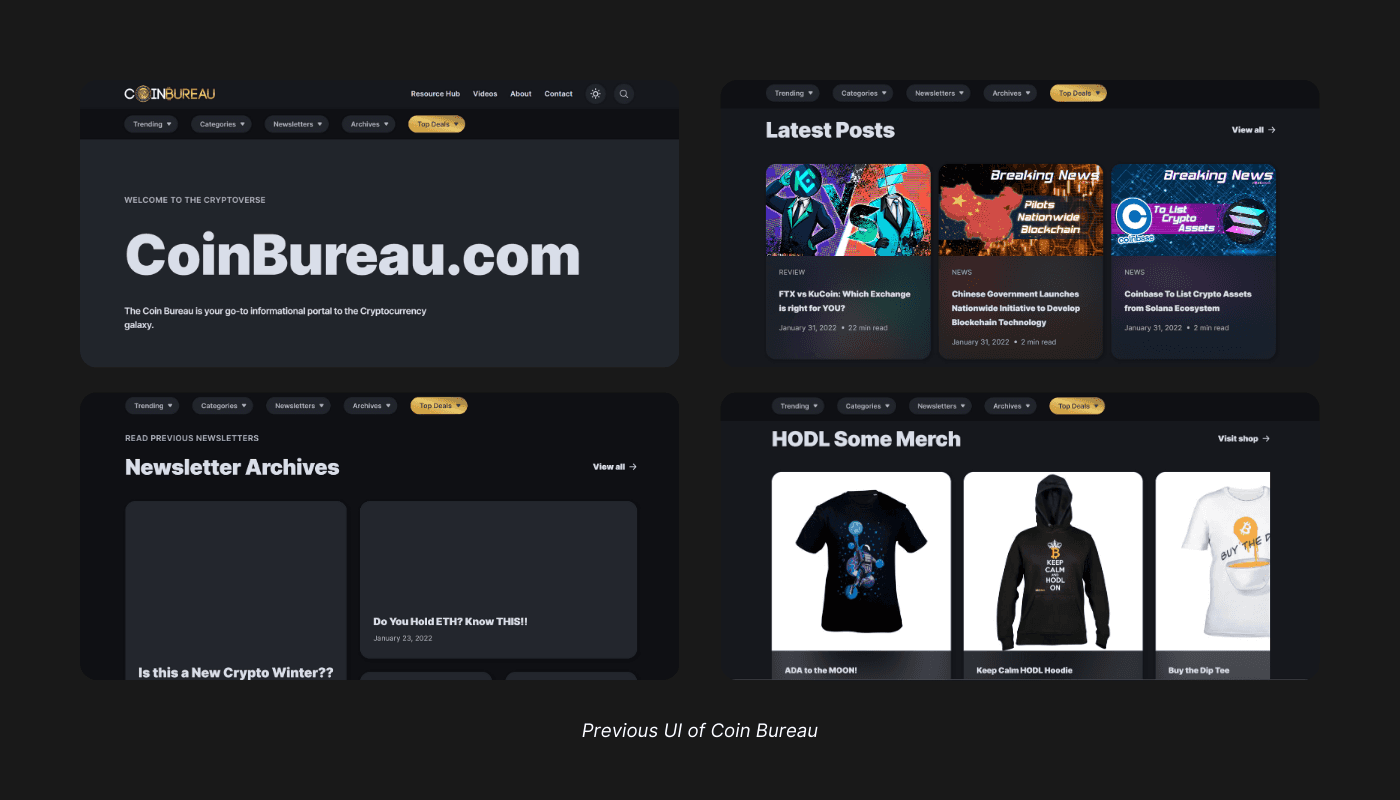
Coin Bureau had valuable content, but users often struggled to find key sections like Featured Blog Articles, Deals, and the Merch Store. The layout buried essential information, leading to high bounce rates and lost revenue opportunities. Inconsistent design elements further eroded brand credibility. As user engagement declined, it became clear that a redesign wasn’t just an option—it was a necessity.
Key Challenges:
❌ Difficult Navigation: Users had trouble locating high-priority pages, reducing engagement and revenue opportunities.
❌ Ineffective Content Layout: Important sections were hidden, increasing frustration and bounce rates.
❌ Design Inconsistencies: Excessive white space and misaligned elements weakened brand trust.
To address these issues, I set clear objectives: streamline navigation, optimize content visibility, and create a cohesive design framework that elevated both usability and aesthetics.
The Approach: Data-Driven Design Decisions
A successful redesign starts with understanding users. I conducted usability testing with real users, analyzing how they navigated the site and identifying pain points. Tools like Hotjar provided heatmaps and session recordings, revealing where users dropped off. I also collaborated with stakeholders and SEO specialists to align the redesign with business goals.
The Solution: A User-Centric Redesign
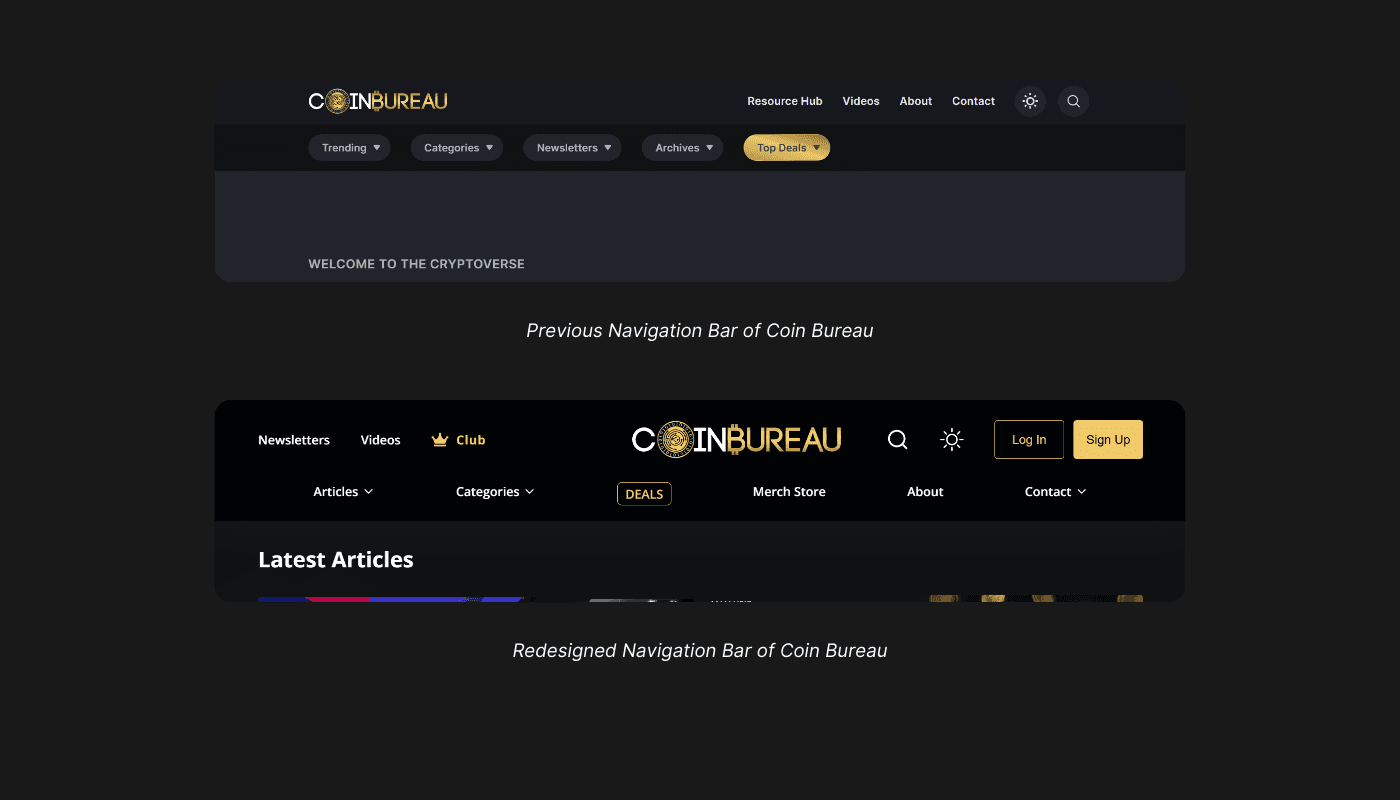
1. Simplified Navigation
The first step was making the site easier to explore. I redesigned the navigation bar to prominently feature key sections like Featured Blog Articles, Deals, and the Merch Store while simplifying the menu structure for better clarity.
Outcome: The improved navigation flow led to an increase in page views for these sections, helping users find what they needed faster.
2. Prioritizing Key Content
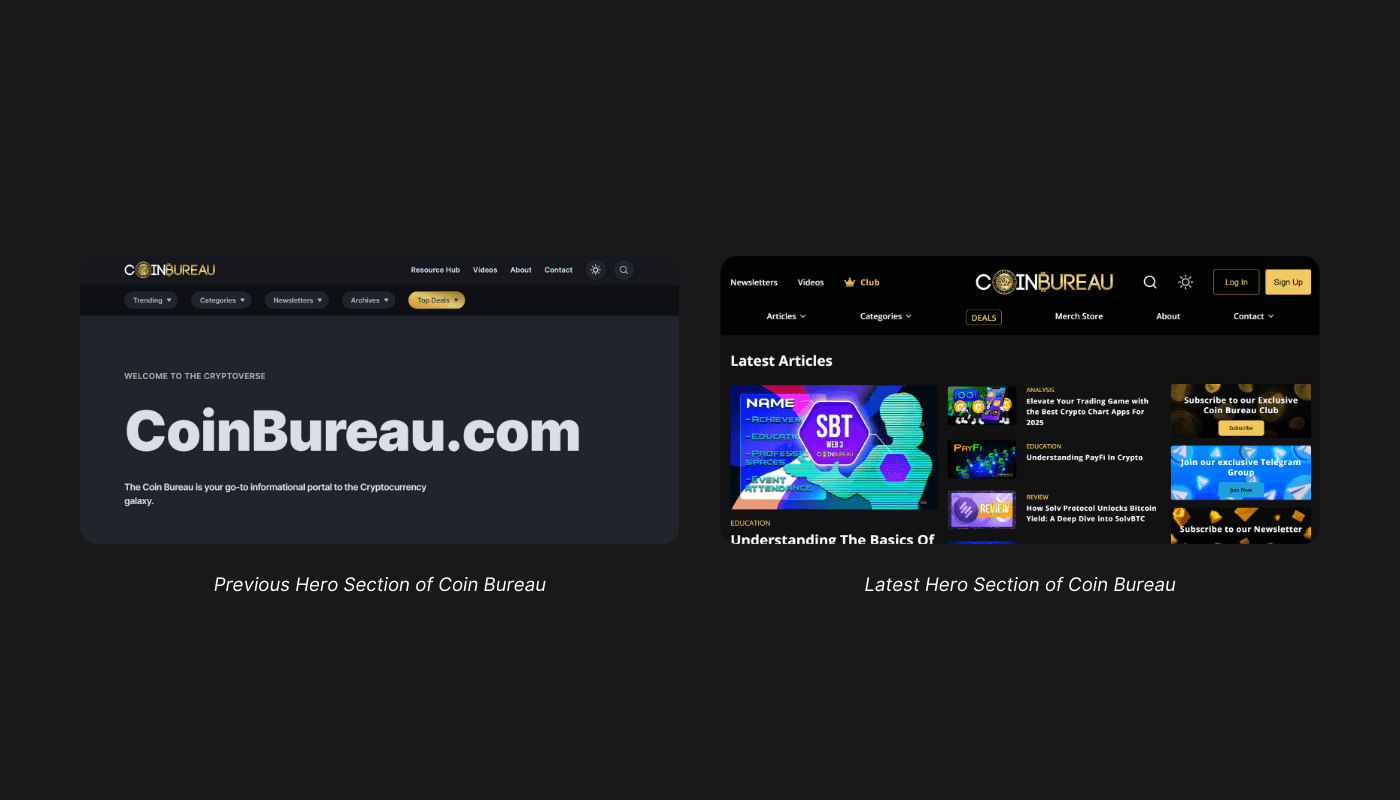
Users visit Coin Bureau for insights, so I restructured the layout to highlight high-value sections like Top Deals, Newsletter Signup, and Featured In, which built trust and credibility. The hero section was also redesigned to showcase the latest articles and social media, creating an engaging first impression.
Outcome: Bounce rates dropped, and interactions with the Top Deals, Newsletter Signup, and Merch Store sections increased significantly, leading to a measurable revenue boost.
3. A Cohesive and Polished Design
The previous design lacked consistency, affecting the site’s professional appeal. I developed a comprehensive design system with standardized typography, color schemes, and layout structures. Unnecessary white space was removed, and components were aligned for a polished look.
Outcome: User feedback indicated a notable improvement in trust and professionalism, with satisfaction scores rising post-redesign.
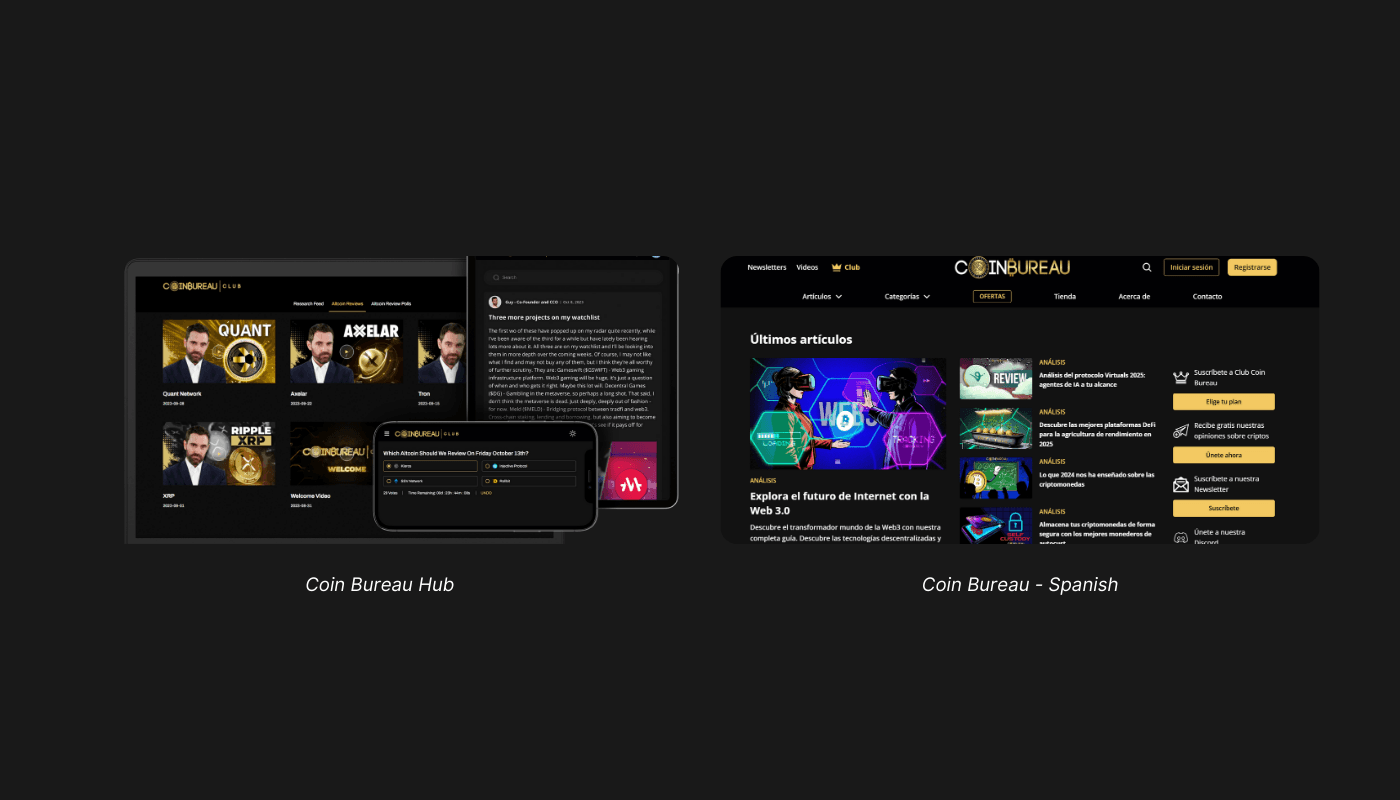
This design framework was later leveraged to enhance other Coin Bureau projects, including the Coin Bureau Club and Coin Bureau Spanish sites, ensuring consistency across platforms.
4. Blog Layouts for Content Variety
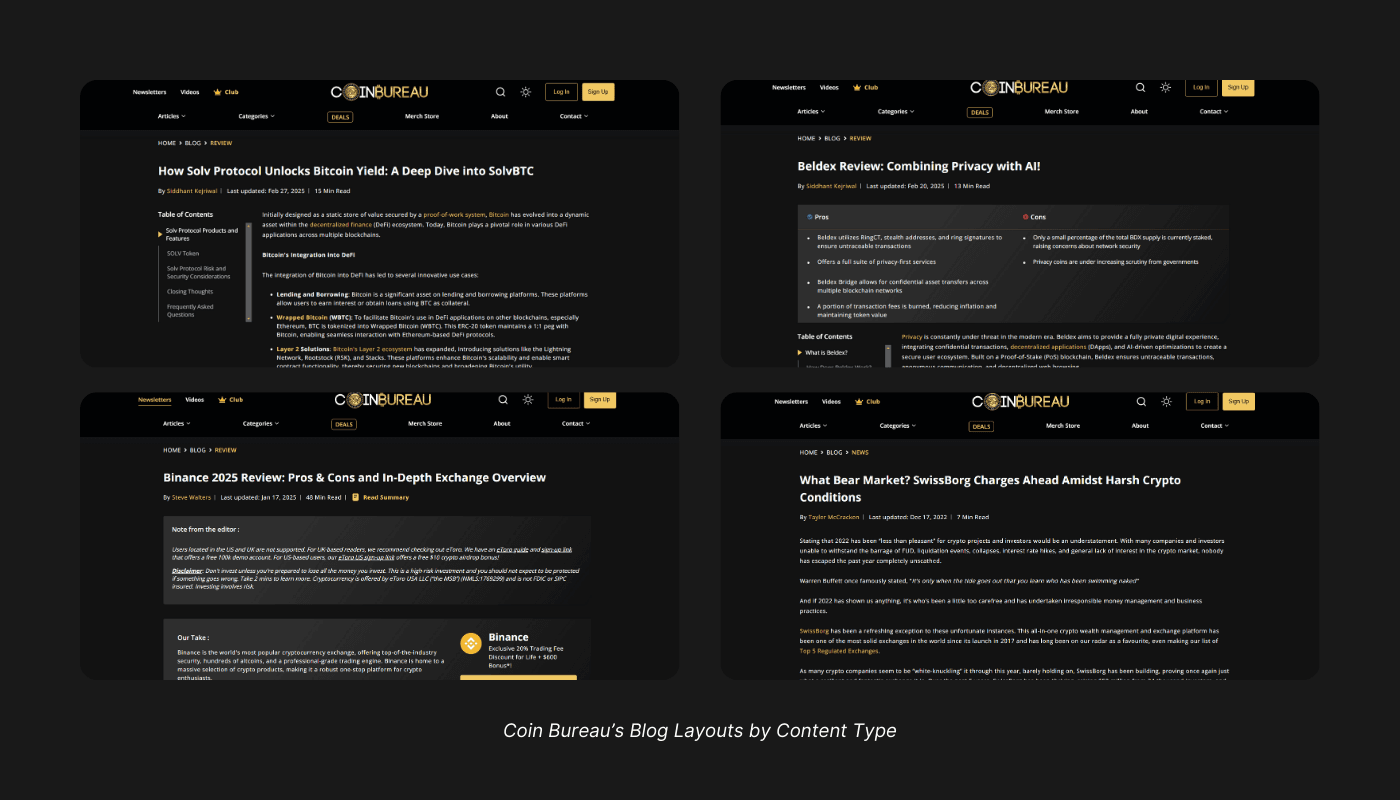
Coin Bureau’s content is diverse—ranging from news to deep-dive analysis. To improve readability and accessibility, I designed multiple blog templates tailored to different content types.
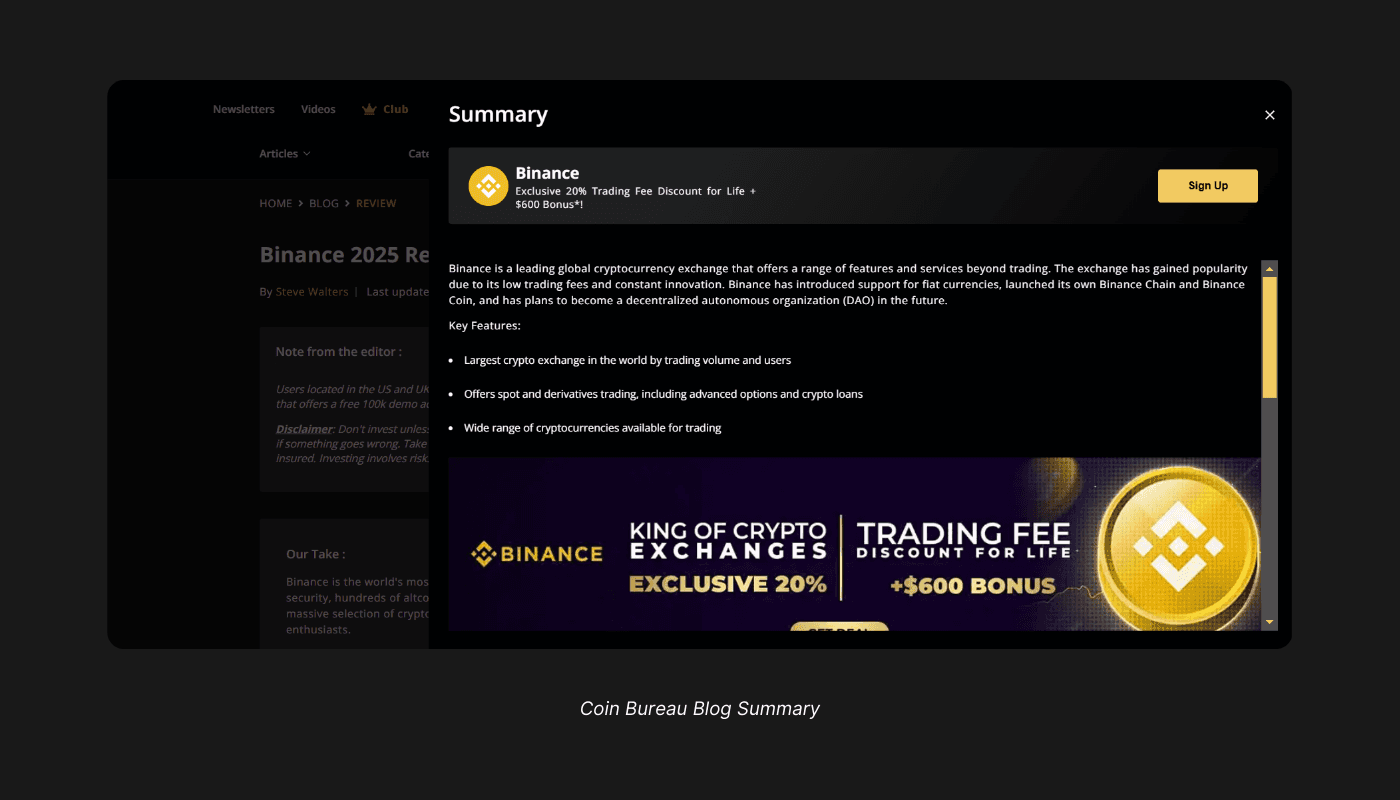
Additionally, many blog posts were quite lengthy, leading to higher bounce rates. To address this, I introduced a summary section at the beginning of each post, allowing users to quickly grasp the key points before diving into the full content.
Outcome: The structured layouts encouraged users to explore more articles, increasing average session duration, while the summary section helped reduce bounce rates by making content more digestible.
Iteration and Testing: Refining for Maximum Impact
A/B testing played a crucial role in validating the design decisions. I tested different versions of the navigation, hero sections, and content layouts, iterating based on real user feedback. These refinements ensured that every element contributed to a seamless and engaging user experience.
The Results: A Website That Works
The redesign wasn’t just about aesthetics—it drove real business results.
🚀 Revenue Impact: The Top Deals and Merch Store sections saw a 15% increase in revenue post-redesign.
🚀 User Engagement: Bounce rates decreased by 28%, while average session duration increased by 60%.
🚀 Content Engagement: The introduction of structured blog templates and summary sections led to a 35% increase in average session duration and a 22% reduction in bounce rates, as users found content easier to navigate and consume.
🚀 Usability: User satisfaction improved, with 65% of users finding the site easier to navigate.
Lessons Learned: Designing for Impact
This project reinforced key design principles:
🗝️ User Insights Drive Success: Prioritizing usability testing and analytics ensures meaningful design decisions that align with user needs.
🗝️ Iteration is Key: The best solutions come from continuous refinement and testing, allowing for data-driven improvements.
🗝️ Consistency Matters: A cohesive design framework enhances brand credibility and user trust, creating a polished and professional experience.
🗝️ Content Structure Drives Engagement: Well-organized layouts encourage users to explore more, reducing bounce rates and increasing session duration.
🗝️ Summarization Enhances Readability: Adding a summary section makes lengthy content more accessible, improving user retention and engagement.
Collaboration: A Team Effort
While I led the UI redesign, this project was a collaborative success. I worked closely with an intern and fellow designer, mentoring and guiding the design process. Engineers ensured smooth implementation, while SEO specialists helped optimize the site’s structure for better visibility in search results.
Looking Forward
The Coin Bureau redesign was more than a project—it was an opportunity to craft a user experience that made an impact. The new website doesn’t just look better; it performs better. It’s a testament to the power of thoughtful design, and I’m excited to bring these insights into future projects.